On Hermie, Time, and Tennis
An exploration of grief.
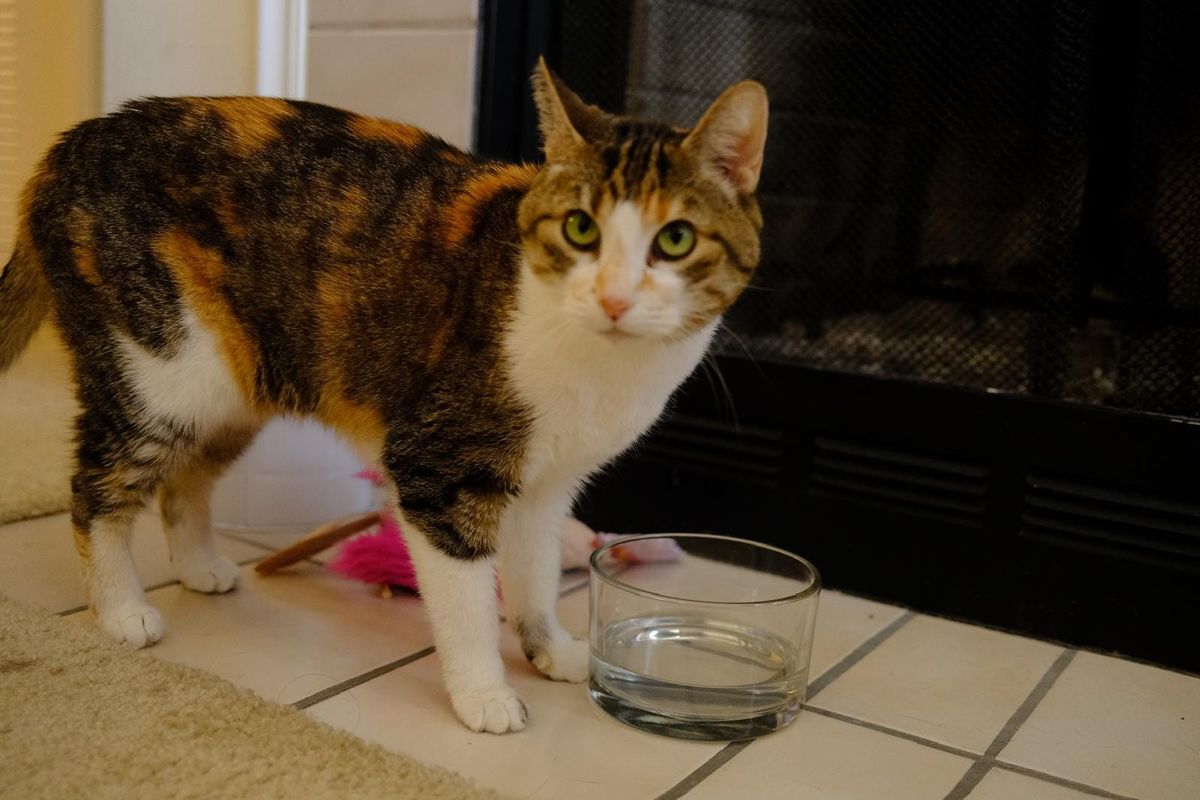
On Saturday, April 18th, 2026, my beloved cat Hermie Guerrettaz-Schimmele passed away. She is survived by her sister Harry, my mother, and me.[1] She was nearly 17 years old. She died after a short battle with bladder cancer.
Hermie is the greatest friend I have ever known. There is no love I have ever experienced like hers, and it is not a feeling I expect to experience ever again. Her love and spirit were so infinite and unyielding that I never considered I may be without them. While I had considered her death; I had never considered her absence from my life. These last few years, I have known roughly that my cats were elderly and may be closer to their death than their birth. Still, the idea that I may live a majority of my life without either or both of my two cats had never entered my mind.
Hermie's illness was brief. Through its entire course, I thought I could beat it. She was 16 years old and had a sizeable tumor in her bladder; I thought I could handle it. The doctors said she had 6 months at most; I thought they were giving up on her. I insisted that her doctors could be wrong, and that they didn’t know her well enough.[2] In the days after the diagnosis, I attributed her lethargy to the medicine we’d put her on. I attributed her weight loss to her lack of appetite. I ignored what could be behind her lack of appetite. Deep down, I really thought it was me or the illness. One of us had to win.
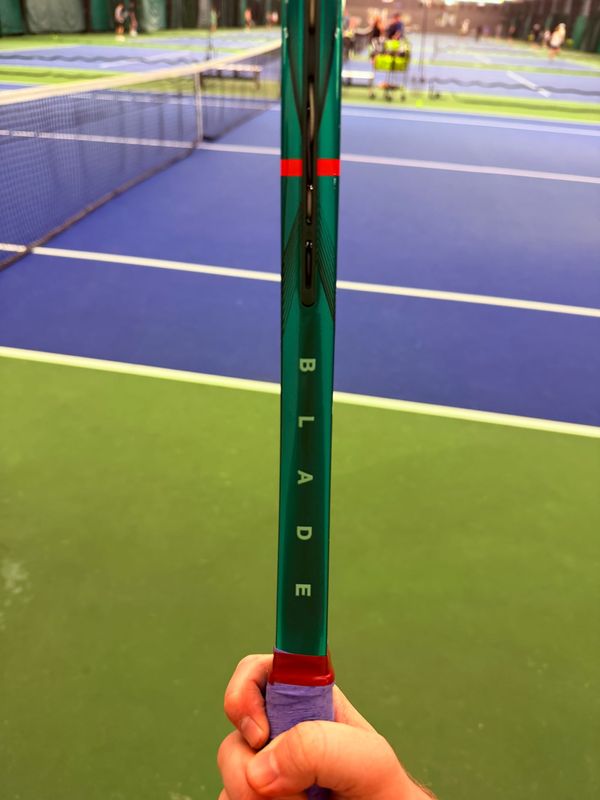
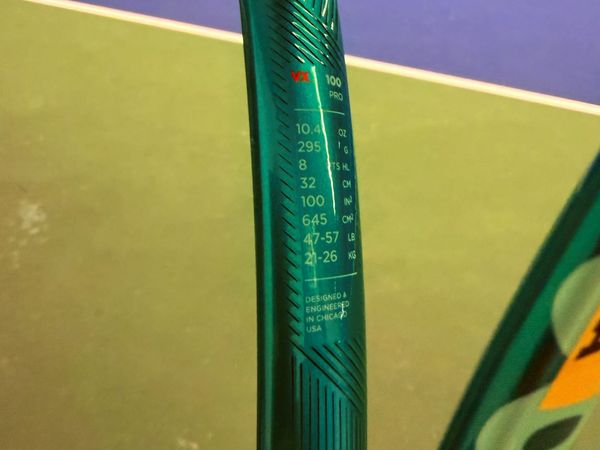
In tennis[3], there’s no sense of time. It is a sport without a clock. Yes, a player can get tired, but there’s still always a chance of a comeback. There is no means of protecting your lead until the buzzer sounds. You have to take the victory in your hands or have it ceded to you by your opponent. The most famous instance of this recently is last year’s Roland Garros Men’s Singles final, in which Jannik Sinner, having won the first two sets of the match, lost three match points giving way to Carlos Alcaraz's comeback and eventual victory. From Jannik’s first match point to Carlos’ last, anything was possible. Either of them could’ve ripped victory from the other. Remarkably, every single tennis match has the potential to play out like this. Up until that very last point is over, everything is still possible. The match is over the second there's a point of no return.
Having my closest companion suddenly diagnosed with terminal cancer felt like playing a tennis match. Having a loved one with a sudden severe illness is not like playing a tennis match. It’s like thinking you’re playing tennis when you’re actually playing a sport with a clock. Your family is making sure you’re prepared and the doctors are pointing at the clock, telling you there’s only two minutes left. In your head, though, you’re playing tennis, and there's always a way back. I realized that I don’t know how to play any other sports.
While Hermie was still breathing, it was easy to apply the timeless nature of tennis to her illness. It didn’t matter to me how old she was or how late her cancer had been diagnosed. I still felt that I could wrestle her back to health. Even with no time on left the clock, I was still agonizing over my unforced errors and double faults. It was when Hermie stopped breathing and I pulled her out of her bed, pupils fixed and dilated, that I realized the buzzer had sounded. I saw the signs and didn't acknowledge them. I wasn't done playing. I felt like we were in the second set and I was getting pulled off the court.
I treated Hermie's death like a thrashing. I felt that I had been bested. I thought: If only I’d not put Hermie on those meds. If only we’d seen an oncologist. If only I’d sat with her 24/7 the last few weeks. The bladder cancer had won, and I had lost. The ensuing hours were manic: My mom and I rushed her body to my grandma’s house in southern Illinois. We buried her next to her mother and sister. I stood there, watching the burial, thinking I could’ve done more. I cried for days and saw my therapist thrice in one week. I felt like I was playing for Hermie and had let her down.
I’d come around to the idea that it would’ve been an insurmountable task, saving Hermie. Something akin to coming back from 6-1, 5-0 down. Still, though, I had believed beating it was possible. Miracles happen, don’t they? But I wasn’t thinking about miracles. I was thinking that if I’d been more cautious with the medicine, monitored Hermie more carefully, and advocated for her more, I could’ve won.
It took awhile, but eventually I came down from match brain. I wasn't in it any longer. The fear and pain had gone through me and I was finally turning back to see its path. I saw how quickly Hermie had lost weight, how much she turned away her food. I saw how hard it was for her to use the restroom. I saw how much she declined and how little I had to do with it. I felt stubborn and idiotic for the way I'd seen things.
I sit here now with understanding of my initial attitude. I don’t herald tennis as this great metaphor for life, but I was certainly applying quirks of its scoring system to my own sense of reality. Ultimately, I’ve learned that what’s great about tennis isn’t what makes it relevant to life and love and grief and joy and the overall human experience. It’s what separates it from those things. On the court, no matter what happened before you walk out, you have a role in how the match takes shape. It can be early in the morning or deep into the night. The player on the other side of the net can be faster than you, stronger than you, better rested, and better fed. You’re still as much of a part of the outcome as your opponent.
I wish that’s how it had been with Hermie. I wish I’d been able to return the serve of her illness. Writing this now, I’ve realized that I wasn’t part of the calculus at all. I wasn’t a factor in the outcome. I walked into the situation with no agency and no bearing over the result. No matter how you cut it, I was a non-entity. I realized that I don’t want life to be like a tennis match. If I had played Hermie’s cancer and lost, I’d never be able to forgive myself. Instead, I'm comforted by the knowledge that I was there for her in her final weeks, days, and moments.
My mom and I happened upon Harry and Hermie. We weren’t necessarily looking to adopt cats. It was 2009, and I was roughly 10 years old. My grandma’s partner had found a litter of cats outside of his workplace, and my grandmother fostered them. She and her partner run an unofficial feline shelter and rehabilitation center. While visiting her on a random weekend, as we did many times a year, we decided to adopt the two kittens. At this point, my mom and I lived in a rented duplex that had an explicit no pets policy, and I emailed our landlord begging to allow us to adopt these two big-eyed beauties. Thankfully, my plea was well-received, and we headed home with our two new companions. My grandma permanently adopted their third sister (Roni) and their mother (Calico). ↩︎
Hermie had survived two massive illnesses previously. One caused by a medication she didn’t respond to well. The other was hyperthyroidism, which we treated with radioactive iodine. She, eventually, came out of both with her whole self intact. ↩︎
Which may be the greatest love of my life outside of Hermie, Harry, and the rest of my family. ↩︎